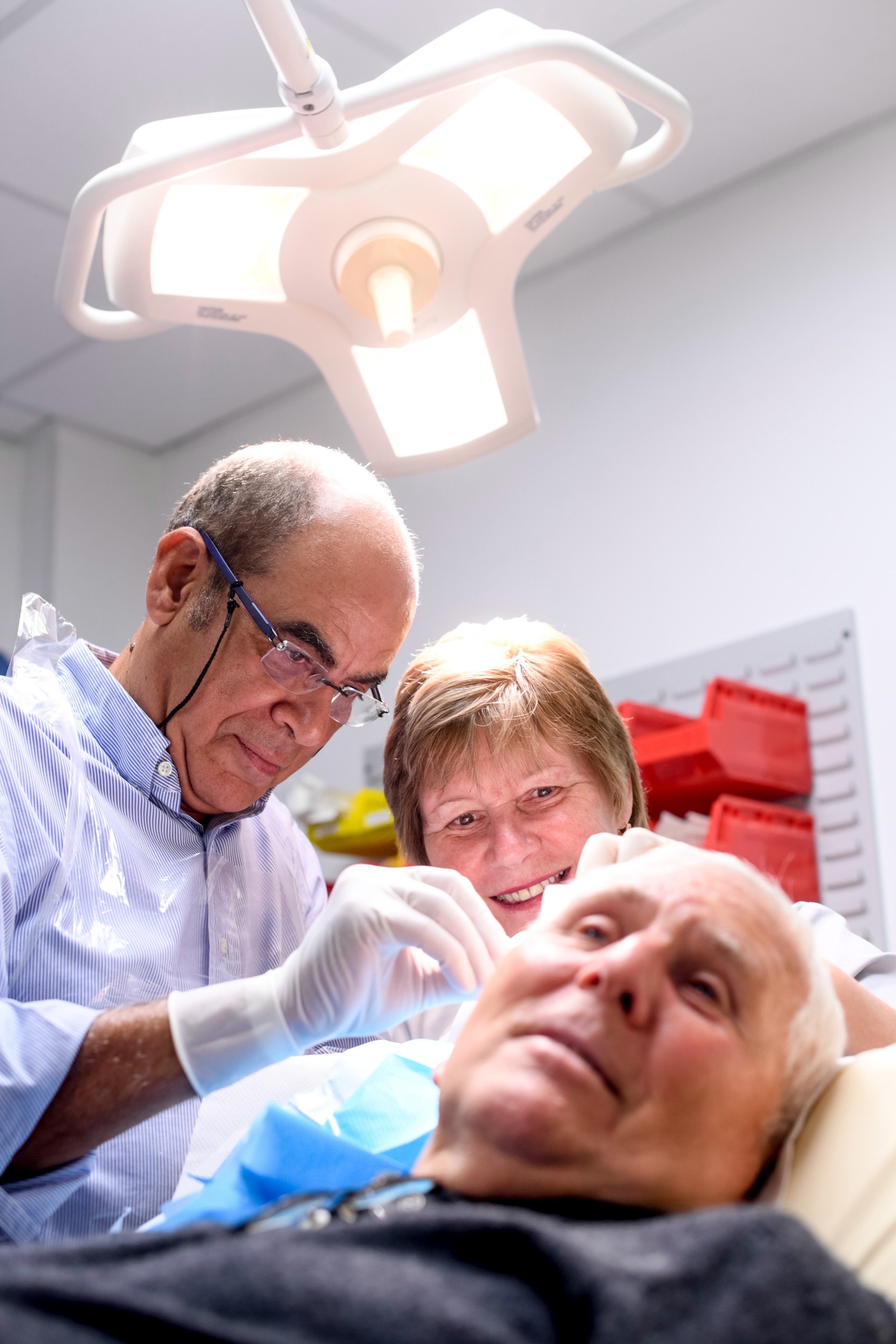
We offer dermatology clinics and minor surgery services in a primary care setting. This is so we can bring care closer to the community.
Our clinics include:
- Lump and bump clinics
- Nurse-led clinics
- Minor surgery
Our patients have a number of different skin conditions. This is why we provide individual care that is tailored to you. We do this professionally and sensitively.
We also provide education and psychological support to help patients who suffer from long-term skin problems look after themselves. We also support patients who experience a significant flare up of their skin condition.
What treatments do we offer?
What is cryotherapy?
Cryotherapy is a treatment that uses cold to help reduce pain, swelling, and inflammation. The word comes from “cryo” meaning cold, and “therapy” meaning treatment.
How does cryotherapy work?
Liquid nitrogen is used to freeze and remove skin lesions like:
- warts
- skin tags
- some small, low‑grade skin cancers
The Dermojet is a medical device that puts medication in the skin without using a needle. It is also known as a jet injector.
Instead of a needle, the Dermojet uses a high‑pressure jet of liquid to push medicine through the skin. This makes the treatment quick and useful for people who are frightened of needles.
What is it used for?
The Dermojet is used to treat conditions that need medication placed directly into the skin, such as:
- keloid scars
- hypertrophic scars
- alopecia areata (patchy hair loss)
- psoriasis plaques
- chronic inflammatory skin conditions
The medication most commonly used is a corticosteroid, which helps reduce inflammation.
How does it work?
- The device is filled with a small amount of liquid medication.
- When triggered, the Dermojet releases a narrow, high-pressure jet.
- This jet passes through the outer layer of skin.
- The medicine spreads into the targeted area underneath.
It takes a fraction of a second, and no needle enters the skin.
These are small, low‑risk procedures that are done to diagnose or treat skin conditions.
These procedures are usually carried out in our outpatient clinic, using local anaesthetic (numbing injection or cream).
You can go home shortly afterwards.
Minor surgery is typically quick, safe, and does not involve general anaesthetic.
Topical treatments are medications that are applied directly to the skin.
They come in forms like creams, ointments, lotions, gels, foams, pastes, and medicated shampoos.
The word topical means the treatment works on the surface of the body, rather than being taken by mouth or injected.
What conditions do we treat?
What is eczema?
Eczema is a common inflammatory skin condition causing ‘itchy skin’. It is also known as dermatitis.
It can affect babies, children and adults from any age. People usually start to get it in childhood. The British Association of Dermatology estimates that 1 in 5 of children will be affected by eczema.
What are the main symptoms?
The main symptoms are:
- Itchiness
- Inflammation
- Dryness
- Weeping
- Blistering
Different factors can affect someone with eczema. These can be:
- Hereditary (passed down from parents)
- The natural skin barrier function
- Inflammatory and allergy responses
- Infections with bacteria and viruses
- Being unwell
- Environmental factors
Herpes Simplex is an infection with the cold sore virus. It can cause eczema to flare up suddenly. It can be painful and have small weeping sores. It can be dangerous so it is always best to get medical advice.
What are the different types of eczema?
There are 7 different types:
- Atopic Dermatitis/ Eczema (the most common type that usually begins in childhood)
- Contact Dermatitis (caused when something like an allergy irritates the skin)
- Pompholyx Eczema (causes small, very itchy blisters on hands and feet)
- Seborrheic Dermatitis (affects oil glands especially the scalp and face)
- Stasis Dermatitis (this happens when there's poor blood flow to the lwoer legs)
- Discoid Eczema (causes round or coin-shaped patches)
- Neurodermatitis (when repeated scratching leads to thick, leathery patches of skin)
What treatment is there for eczema?
You can manage your eczema with different treatments but you can't cure it. They include:
- Emollients (creams, lotion and gels)
- Topical Corticosteroid (steroid creams)
- Topical Calcineurin Inhibitors (non-steroid creams)
Ointments and emollients can be flammable. This means they can cause a fire. They will often come with a warning label. Please be careful when you use these. Avoid flames and flammable risks. You can use all ointments and emollients instead of soap.
Psoriasis is a common skin condition that affects the way skin cells grow.
Normally, the skin renews itself every 28 days. In psoriasis, new skin cells are made much faster (sometimes 10 times quicker) and reach the surface in 2–3 days. Because these cells are not fully developed, they build up on the skin and form red patches covered with silvery‑white scales.
About 2% of people in the UK have psoriasis.
The exact cause of psoriasis is unknown, but we do know that it can run in families. It is not contagious, so you can't catch it from someone else.
Some things can trigger psoriasis in people who are prone to it. They include:
- infections like a sore throat
- injury to the skin (scratches, burns, cuts)
- stress
- hormonal changes, for example during puberty
Psoriasis is a chronic condition, which means it may come and go throughout childhood, the teenage years, and into adult life.
Understanding the condition and the treatments used to manage it can help make flare‑ups easier to control.
What treatments are available?
Most people with psoriasis start their treatment after seeing a GP.
You usually start with creams that you put on your skin. These can be creams, ointments or gels and have different ingredients.
We will assess you and either treat you or refer you to hospital for another treatment.
Seborrheic dermatitis is a common skin condition that causes red, flaky and sometimes itchy skin. It mainly affects areas of the body where there are lots of oil glands like:
- the scalp
- eyebrows
- eyelids
- nose and the sides of the nose
- ears
- the chest
On the scalp it is often called cradle cap in babies and dandruff in older children and adults.
What does it look like?
Seborrheic dermatitis usually causes:
- greasy or dry flakes (white or yellowish)
- redness
- itching (sometimes, but not always)
- scaling or crusting
- patches of irritated skin
In babies with cradle cap, the scalp may look oily with thick, yellow scales.
What Causes It?
The exact cause is not fully known, but it is linked to:
- the skin’s natural yeast (Malassezia)
- oil production
- the body’s immune response
It is not caused by poor hygiene and is not contagious. That means you can't catch it from someone else.
Who Gets It?
Seborrheic dermatitis is common in:
- babies (cradle cap)
- teenagers (because of increased oil production)
- adults
- people with certain conditions, like eczema or oily skin
It can come and go over time.
How is it treated?
Treatment helps control symptoms and may include:
- medicated shampoos (anti‑yeast or anti‑dandruff)
- topical creams (antifungal, anti‑inflammatory)
- gentle removal of flakes with oil or emollients
- regular washing of affected areas
Most cases improve well with the right care.
Infected skin conditions are skin problems caused by bacteria, viruses, fungi, or parasites. They often occur when the skin is damaged, inflamed, or broken. This makes it easier for germs to enter.
Infections can happen on their own or as a complication of other skin conditions like eczema, psoriasis, or dermatitis.
Bacterial Skin Infections
These are caused by bacteria such as Staphylococcus aureus (Staph) or Streptococcus (Strep).
Common examples:
- Impetigo – red sores, blisters, and yellow crusts
- Cellulitis – deeper infection causing redness, swelling, heat, and pain
- Folliculitis – infected hair follicles
Signs of bacterial infection:
- increasing redness
- warmth
- swelling
- oozing or crusting
- pain
- fever (sometimes)
Treatment may include antibiotic creams or oral antibiotics.
Viral Skin Infections
Caused by viruses that infect the skin or trigger rashes.
Common examples:
- Herpes simplex – cold sores or painful blisters
- Molluscum contagiosum – small, round, flesh‑coloured bumps
- Warts – caused by HPV
- Chickenpox and shingles
Signs of viral infection:
- grouped blisters
- little bumps
- spreading rash
- itching
- mild fever (some cases)
These often clear on their own, but some may need antiviral treatment.
Fungal Skin Infections
These develop when fungi grow on the skin, especially in warm, moist areas.
Common examples:
- Ringworm – circular, scaly patches
- Athlete’s foot – itchy, peeling skin between toes
- Fungal nail infections
- Thrush – can affect skin folds in babies or adults
Signs of fungal infection:
- itchy red patches
- scaling or peeling
- ring‑shaped rash
- cracked skin
Treatment usually involves antifungal creams, powders, or tablets.
Parasitic Skin Conditions
Caused by small mites or insects that live on or under the skin.
Common examples:
- Scabies – mites burrow into the skin, causing intense itching
- Head lice – tiny insects in the hair
- Bedbug bites – small, itchy bites in clusters
Signs of parasitic infection:
- severe itching
- red bumps
- bite marks
- thin lines on skin (in scabies)
These require specific treatments to kill the parasite and sometimes to treat close contacts.
Chronic skin conditions are skin problems that last a long time, often months or years. They may flare up, improve, and then return again. Although they cannot always be cured, they can usually be well managed with the right treatment and skin care.
Chronic skin conditions often affect:
- the skin barrier (how well the skin protects itself)
- immune responses in the skin
- the way skin cells grow
They are not usually contagious, and they are common in both children and adults.
Examples of common chronic skin conditions
-
Eczema / Atopic Dermatitis
-
Psoriasis
-
Acne
-
Vitiligo
-
Seborrheic Dermatitis
-
Urticaria (Chronic Hives)
-
Rosacea
Low‑grade skin cancers are types of skin cancer that:
- grow slowly
- are less likely to spread
- are usually very treatable, especially when found early.
They are sometimes called non‑melanoma skin cancers, and most are not life‑threatening.
- Roaccutane for acne
- Biological and systemic treatments
- Light therapy
- Patch testing
To receive these treatments you need a referral to the hospital dermatology clinic.
Where can I find out more?
You can find us at Bunny Hill Primary Care Centre. We are on the 1st floor.
The address is:
Bunny Hill Primary Care Centre
Hylton Lane
Sunderland
SR5 4BW
Is my information confidential?
Yes. All information you give is confidential. We keep your notes safe in line with the NHS Code of Practice.
How many appointments will I have?
We offer short-term treatment and support. We will review how helpful this is at each appointment.
What if I can't attend my appointment?
To get the very best from your treatment it is important that you attend every appointment.
If you need to cancel an appointment you can call us on 0191 5195850. Please give us as much notice as possible.
We understand issues can come up, but we need to follow a strict cancellation and missed appointment policy. If you do not follow the policy you will be discharged from our service. This will happen when:
- You miss 2 appointments without telling us
- You cancel 2 appointments in a row
- You cancel 3 appointments
- You cancel 2 appointments and miss 1 without telling us
What if I have feedback?
This is your treatment and it needs to be the best it can for you. If you have any problems or questions, please speak to us to see if we can help you. You can also contact the Customer Services Department by:
- Calling 0191 404 1072
- Emailing stsft.
adviceandcomplaints .@nhs.net
Violent and Abusive Behaviour
We do not tolerate any violent and abusive behaviour. We will take the appropriate action to protect our staff, patients and the public.
Can I contact you on social media?
No. We can't talk to you through email or social media channels like Facebook or Twitter.
General links:
Links for people with eczema:
Links for people with psoriasis:
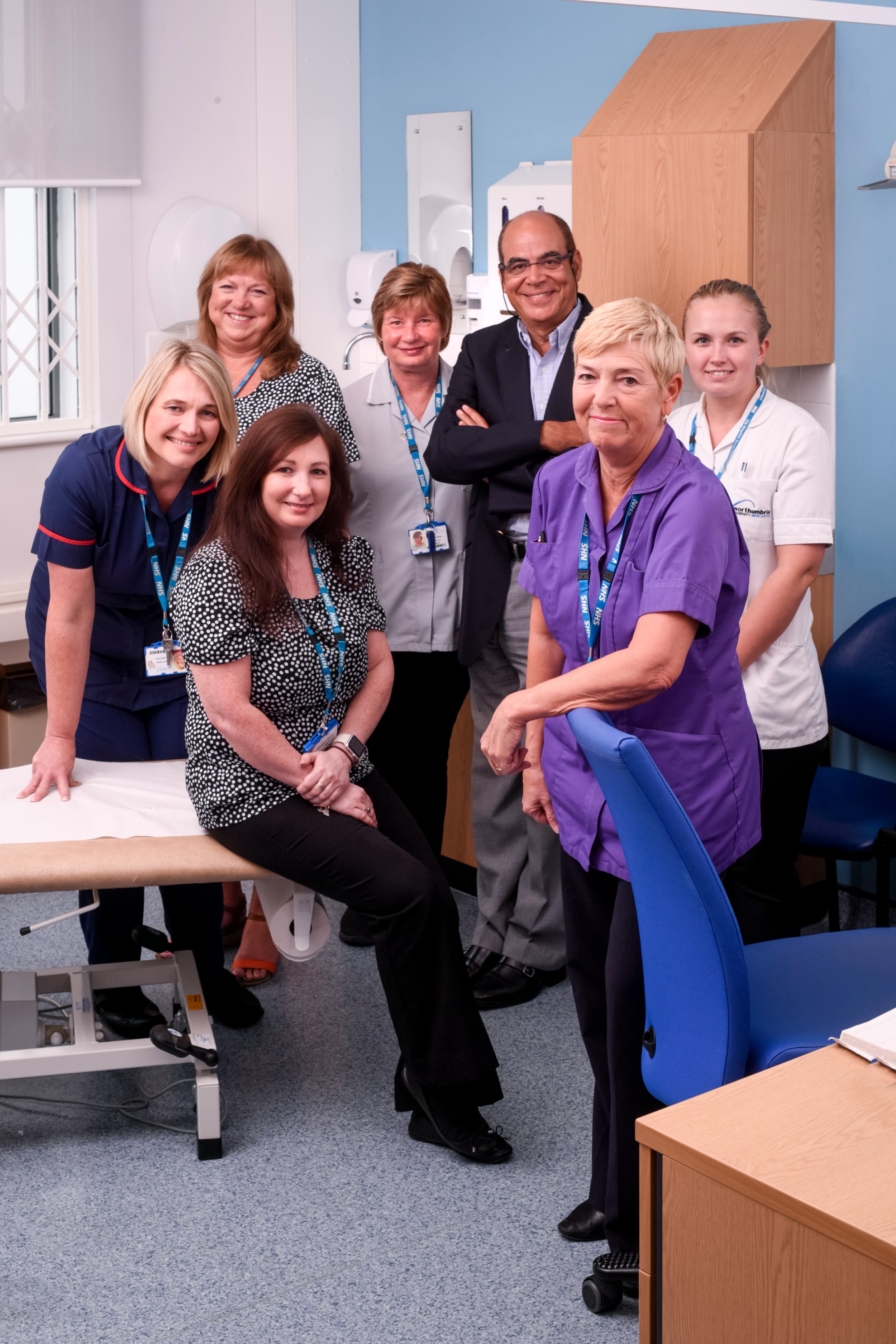
Our senior team in Community Dermatology
- Clinical Lead - Dr A Mon
- Divisional Director - Claire McManus
- Directorate Manager - David Newell