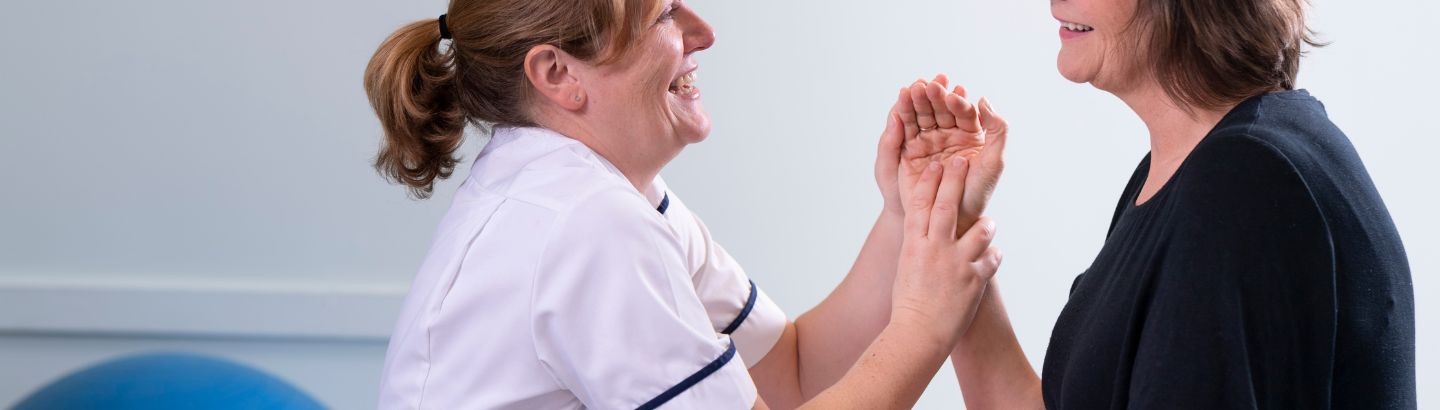
Physiotherapy helps people move better, feel stronger and manage pain by using exercises, hands‑on treatment and advice to support their health and recovery.
We look after people of all ages, from newborn babies to older adults.
Our physiotherapists assess and treat people who have a variety of needs. These might include problems with everyday activities, breathing, walking, transferring, balance, dizziness and pain.
We work with other health care professionals to give patient‑centred care. Treatment can take place in hospital, in an outpatient clinic or in the community.
What inpatient services do we provide?
You are an inpatient if you are admitted to hospital and stay overnight.
We treat patients on one of our medical, surgical, children's or care of the older person wards. This also includes the Integrated Critical Care Unit (ICCU).
We also treat patients for chest physiotherapy in the emergency department and on the admissions wards.
We are specialists in providing assessment and treatment to patients admitted to hospital who:
- have had an operation
- have difficulty breathing
- have had a fall because of balance
- have had a decline in their mobility
Treatments include:
- supporting you to change to a healthier lifestyle
- giving you fitness advice
- helping with movement and walking
- balance training
- dizziness management
- breathing control
- stair assessments
- falls advice
- pain management
We will work with the staff on your ward to find the best way for you to move and get about. You will be encouraged to get out of bed every day and get dressed when you can. We will also give you equipment to take home and refer you to our community teams for follow ups if you need them.
We assess and treat inpatients with many different muscle, bone and joint problems.
We support people with conditions such as:
- Osteoarthritis - this is when the smooth covering on your joints wears down, causing pain and stiffness
- Rheumatoid arthritis - this is when the body’s immune system attacks the joints, making them swollen and painful
- Back and neck pain - this happens when muscles, joints, or nerves in these areas become strained or irritated
- Complex limb correction surgery - this fixes bones that are not straight or have grown in the wrong position
- Day‑case surgery recovery - this is the healing period after a small operation where you go home the same day
- Facial palsy - this is when the muscles on one side of the face become weak or hard to move
- Fractures - a fracture is a broken bone that needs time and support to heal
- Joint pain - this is discomfort or soreness in the places where two bones meet
- Joint replacement surgery - this removes a damaged joint and replaces it with an artificial one to reduce pain and improve movement
- Soft tissue repair surgery - this fixes injured muscles, tendons, or ligaments
- Fracture fixation surgery - this uses plates, screws, or rods to hold broken bones in place while they heal
- Post‑operative care and rehabilitation - this helps people recover strength and movement after surgery
- Soft tissue injuries - these happen when muscles, ligaments, or tendons are stretched or torn
Our Neurological Physiotherapy team help people who are staying on Ward E58 or Ward D46 at Sunderland Royal Hospital.
We are specialists in assessing and treating patients in hospital who have trouble moving because of problems in the central nervous system or genetic conditions. These include:
Stroke
A stroke happens when blood cannot reach part of the brain because of a blockage or bleeding. This can cause problems with vision, balance, strength, and muscle control. Treatment is led by doctors and nurses with support from specialist therapists. Physiotherapy can help with movement, strength, balance, spasms and posture.
Acquired brain injury (ABI)
An ABI is damage to the brain caused by an accident, infection, lack of oxygen, a tumour or other sudden events. Symptoms vary depending on the part of the brain affected. Treatment supports recovery, and physiotherapy can help with physical problems.
Spinal cord injury (SCI)
A spinal cord injury happens when the spinal cord is damaged by trauma or illness. This can affect movement, feeling and strength. Treatment focuses on keeping the spine stable, reducing swelling and providing rehabilitation from a specialist team.
Guillain‑Barré syndrome (GBS)
GBS is a condition where the immune system attacks the nerves outside the brain and spinal cord. It can cause tingling, numbness, weakness and pain that often starts in the feet and hands and moves upward. Physiotherapy helps with strength, balance, movement, posture and recovery. Most people improve over time, but some may have lasting weakness.
Multiple sclerosis (MS)
MS is a condition where the immune system damages the protective coating around nerves. This slows or blocks messages in the brain and spinal cord, which can affect movement. Treatment is led by doctors and nurses, and self‑management can help with symptoms. Physiotherapy supports strength, balance, pain, posture and movement.
Cerebellar ataxia
Cerebellar ataxia is a group of inherited conditions that get worse over time and affect balance, vision and coordination. Treatment focuses on keeping muscles strong, improving balance and staying safe while moving.
Muscular dystrophy (MD)
Muscular dystrophy is a group of genetic conditions that cause muscles to become weaker over time. Different types start at different ages and affect people in different ways. Physiotherapy can help with movement, strength and managing symptoms.
What treatments do we provide?
Treatments include:
- Supporting you to live a healthier lifestyle
- Helping with fitness
- Movement re-education
- Balance training
- Managing your dizziness
- Managing your pain and spasticity (a problem that makes muscles feel stiff or tight)
What happens when I am referred?
You might be referred by a doctor, nurse or therapist on your ward.
A physiotherapist will assess you within 24 hours and will make a treatment plan.
Your assessment will last between 30 and 60 minutes. Physiotherapy sessions after that might last for different amounts of time.
We will talk to you about:
- what you would like to improve
- how you can improve
- who might be able to help you
- things you can do to help yourself
When you're in hospital, it would be helpful to have:
- sturdy footwear
- clothes that fit loosely and are comfortable
- any hearing aids or glasses you use
We'll give you exercises to do when your physiotherapist isn't with you. It's important you do these. They will help you get better. Your friends and family might be able to help you.
What outpatient services do we provide?
You are an outpatient if you come into hospital for an appointment and go home the same day.
We treat adults aged 18 and older who have Breathing Pattern Disorder (BPD). This means their normal breathing has changed.
We work with consultant cardiologists (heart doctors), consultants in thoracic medicine (chest doctors) and specialist nurses to support your care. We help you understand your symptoms, stay active safely, and manage your breathing.
What is BPD?
BPD is when you breathe in an unhelpful way. It can be caused by stress, illness, injury, worry or low mood. It is not always caused by disease.
Common symptoms include:
- Shortness of breath
- Palpitations
- Pain
- Low fitness
- Trouble moving or doing daily tasks
Breathing often returns to normal after the cause improves, like after a chest infection. Sometimes the pattern stays changed because several stresses happen at once or during a major life event. Physiotherapy can help reset your breathing.
Before coming to physiotherapy, you will have had tests to rule out other problems. A physiotherapist will ask about your health, lifestyle, fitness, stress, and anxiety.
What does treatment include?
Physiotherapy treatment for BPD might include:
- Breathing exercises
- Movement and posture training
- Fitness work
- Relaxation
- Lifestyle advice
- A self‑management plan
Most people start to see improvement after 4–6 weeks.
We treat adults aged 18 and over who have had a recent heart problem. We help you build up your fitness, manage your symptoms and return to your normal activities, hobbies and work.
Physiotherapy can:
- Help you exercise safely
- Check your blood pressure, pulse, and how your heart reacts to activity
- Help you change to a healthier lifestyle
- Identify what is stopping you from being active
- Support you to feel confident and in control
We can refer you to the STEPs to Health exercise programme or we can give you an individual home plan. We can review you by phone or in person.
We can also assess your breathing. Breathing can change after a heart problem, and we can teach you breathing and relaxation exercises. We will help you understand the difference between heart‑related chest pain and pain caused by muscles or breathing.
People we support might have experienced:
Angina
Angina is chest pain or tightness caused by reduced blood flow to the heart. It can spread to your arms, neck, jaw or stomach, or you may only feel breathless. It is usually managed with daily medicines and a GTN spray for quick relief.
Cardiomyopathy
Cardiomyopathy is a disease of the heart muscle where the walls become weak, thick or stiff. This affects how well the heart pumps blood. It can be inherited and has different types.
Coronary angioplasty
Angioplasty widens a blocked heart artery. A small balloon is inflated inside the artery and a stent is often placed to keep it open. This helps reduce chest pain and breathlessness.
Heart Attack
A heart attack happens when the blood supply to the heart muscle is suddenly blocked, usually by a clot. Emergency treatment helps restore blood flow and limit damage. Many people become more active after recovery, and emotional support is available if needed.
Heart Surgery
Heart surgery includes:
- Bypass surgery (CABG) - a new blood vessel is used to go around a blocked artery
- Valve surgery - a damaged valve is repaired or replaced
The breastbone is opened for these surgeries and wired back together. You must avoid lifting or pulling for 12 weeks. Physiotherapy helps you return to safe activity.
Implanted Devices
Pacemaker
A pacemaker helps control your heartbeat with small electrical signals.
ICD (Implantable Cardioverter Defibrillator)
An ICD can correct dangerous heart rhythms by giving a quick electrical shock. Some devices combine both functions.
For the first 6 weeks:
- Do not lift the arm on the implant side above shoulder height
- Avoid heavy lifting
- Do gentle shoulder movement only
If you have difficulty returning to activity, you can be referred back to physiotherapy.
We assess and treat outpatients who have had lower‑limb corrective surgery. Our team is based in Sunderland.
People may need this type of surgery for different reasons. This includes some conditions they are born with and problems that develop after an accident or injury that affects the legs.
Lower‑limb amputation is when part or all of a leg is removed because it is too damaged or unhealthy to save. It can happen for many reasons. It might be because of an accident, poor blood flow, diabetes or a planned operation. Some medical conditions and lifestyle choices can also increase the risk.
What will happen while I'm in hospital?
After your amputation, you will first be advised not to walk. You will use a wheelchair and follow the transfer advice given by your physiotherapist.
It is important to keep your legs strong and flexible. In hospital, your physiotherapist show you:
- How to position your legs to avoid contractures
- How to protect and care for your remaining leg
- Exercises to keep your joints moving
- Exercises to strengthen your muscles
These exercises will be checked again at your outpatient appointment.
What happens at my assessment?
Our team will give initial treatment and assess whether a prosthetic leg may be suitable for you.
This assessment looks at:
- Your skin and muscle health
- Your general health
- How you respond to the exercise programme
- How you manage a PPAM (pneumatic post‑amputation mobility) aid
A further assessment will take place at the Disablement Service Centre (DSC) at the Freeman Hospital in Newcastle.
How do we support you?
We work with other health professionals to support wound care and pressure care. Physiotherapy may include:
- Muscle strengthening
- Practising transfers with or without aids
- Walking rehabilitation
- Balance training
The Sunderland Integrated Musculoskeletal Service (SIMS) is a team of specialist physiotherapists, GPs and consultants who treat muscle, joint and bone problems that affect movement, daily activities and wellbeing.
We work with you and other health professionals to set treatment goals based on your needs. We help you improve flexibility, strength, balance, and mobility so you can reduce pain, regain independence, and get the best possible outcome.
You can find out more about SIMS here: Sunderland Integrated Musculoskeletal Service
We assess and treat inpatients with urogynaecology and colorectal problems. We support patients with conditions such as:
-
Stress urinary incontinence - this is when pee leaks during coughing, laughing, or exercise because the pelvic floor muscles are weak
-
Overactive bladder - this is when you feel a sudden, strong need to pee and may need to go often
-
Voiding dysfunctions - these are problems with emptying the bladder fully or starting to pee
-
Obstructed defecation - this is when it is hard to poo, even when you feel the urge to go
-
Sexual dysfunction - this is when someone has pain during sex or struggles to have sex because of physical or emotional causes
We are specialists in assessing and treating patients who have trouble moving because of problems in the central nervous system or genetic conditions. These include:
Stroke
A stroke happens when blood cannot reach part of the brain because of a blockage or bleeding. This can cause problems with vision, balance, strength, and muscle control. Treatment is led by doctors and nurses with support from specialist therapists. Physiotherapy can help with movement, strength, balance, spasms and posture.
Acquired brain injury (ABI)
An ABI is damage to the brain caused by an accident, infection, lack of oxygen, a tumour or other sudden events. Symptoms vary depending on the part of the brain affected. Treatment supports recovery, and physiotherapy can help with physical problems.
Spinal cord injury (SCI)
A spinal cord injury happens when the spinal cord is damaged by trauma or illness. This can affect movement, feeling and strength. Treatment focuses on keeping the spine stable, reducing swelling and providing rehabilitation from a specialist team.
Guillain‑Barré syndrome (GBS)
GBS is a condition where the immune system attacks the nerves outside the brain and spinal cord. It can cause tingling, numbness, weakness and pain that often starts in the feet and hands and moves upward. Physiotherapy helps with strength, balance, movement, posture and recovery. Most people improve over time, but some may have lasting weakness.
Multiple sclerosis (MS)
MS is a condition where the immune system damages the protective coating around nerves. This slows or blocks messages in the brain and spinal cord, which can affect movement. Treatment is led by doctors and nurses, and self‑management can help with symptoms. Physiotherapy supports strength, balance, pain, posture and movement.
Cerebellar ataxia
Cerebellar ataxia is a group of inherited conditions that get worse over time and affect balance, vision and coordination. Treatment focuses on keeping muscles strong, improving balance and staying safe while moving.
Muscular dystrophy (MD)
Muscular dystrophy is a group of genetic conditions that cause muscles to become weaker over time. Different types start at different ages and affect people in different ways. Physiotherapy can help with movement, strength and managing symptoms.
Listen to our episode of Our People Podcast
Where can I find out more?
Sunderland Royal Hospital
Use entrance 8. This is on the right side of the building if you come in on Chester Road.
South Tyneside District Hospital
Use the main entrance at Ingham Wing. We are on the right just after reception and before the cafe.
Our senior team in Physiotherapy
Divisional director - Hannah Davidson
Clinical director - Philip Adams
Directorate manager - Tim Burdett